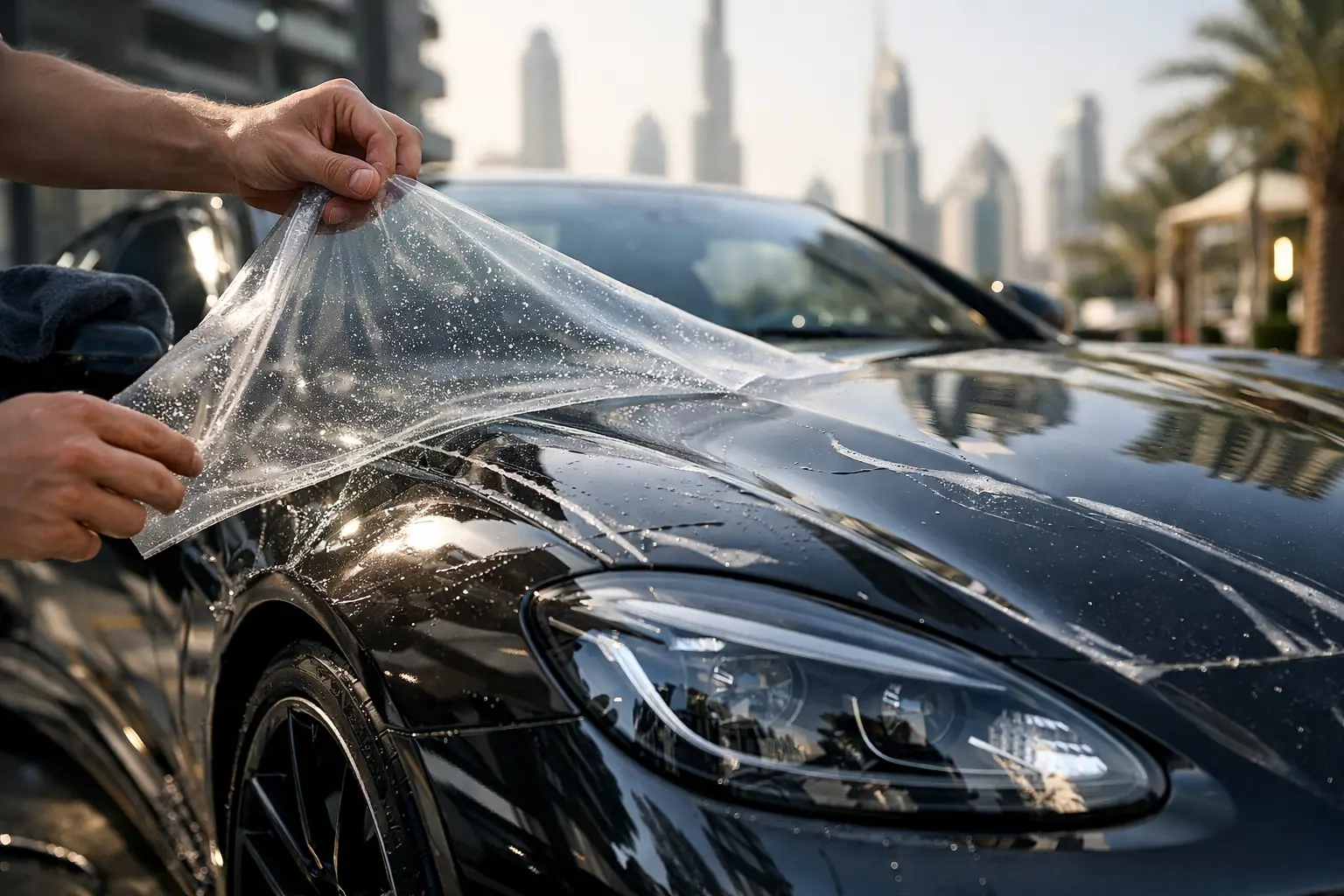
Installing Paint Protection Film is one of the smartest decisions a car owner can make – especially if you care deeply about your car’s paint, finish, and long-term value. But here’s the part many people underestimate: PPF maintenance doesn’t end at installation.
PPF is designed to protect your car, yes but how long it performs at its best depends heavily on how you care for it afterward.
This 2026 guide walks you through exactly how to maintain your car after PPF installation, so your investment continues to look and perform the way it should.
Quick Insights: What This Guide Covers
Topics covered. Let’s break it down!
- How to care for your car immediately after PPF installation?
- Daily, weekly, and long-term PPF maintenance tips for Dubai climate
- Mistakes that silently damage PPF and avoid warranty?
- How to extend PPF lifespan in UAE heat and sand conditions?
The Quick Overview of 3M PPF Installation for Car in Dubai
3M Paint Protection Film (PPF) is a transparent, high-performance polyurethane film designed to protect a car’s painted surfaces from everyday damage. In a city like Dubai, where intense sunlight, fine desert sand, and high temperatures are constant. In such scenarios PPF acts as an invisible shield for your vehicle.
Professional installation by an authorized 3M installer like Illusionaire ensures the film bonds correctly. It performs well in UAE heat, and remains covered under the 3M warranty, making it a trusted solution for car owners who want protection that lasts.
The First 7 Days After PPF Installation (Critical Phase)
After installation, PPF needs time for the adhesive to fully bond to the paint. The first week is the most important period in your PPF’s life. During this time, the adhesive is curing and bonding fully to the paint.
What’s Normal During This Phase?
The following are completely normal during this phase. These usually disappear as moisture evaporates. Don’t panic. Don’t poke. Definitely don’t peel.
- Small water bubbles or haziness
- Light streaking under the film
- Slight texture changes
What to Avoid Completely?
In following scenarios, if you damage the film during this phase, warranty coverage may be affected.
- Washing the car
- Pressure washing
- Touching edges
- Parking under trees or dusty zones
How to Wash Your Car After PPF Installation? (Post Day 7)
Once the curing period is complete (usually 7–10 days), washing can resume, but not the way you’re used to.
Best Washing Practices for PPF Cars
- Use pH-neutral car shampoo
- Wash by hand (two-bucket method)
- Use soft microfiber mitts
- Rinse thoroughly to remove sand particles
- Dry with microfiber towels (no air blowers on edges)
Can You Use Automatic Car Washes?
Short answer: Avoid them.
Automatic brushes + Dubai sand = disaster for PPF clarity. If unavoidable, choose touchless car washes, but hand washing remains the gold standard for luxury car PPF care.
Long-Term Care Tips to Extend PPF Life (5–10 Years)
Want your PPF to last the full warranty period? Do this.
- Annual professional inspection (ideally from Illusionaire or an authorized 3M installer)
- Ceramic reapplication when needed to maintain shine and protection
- Immediate repair of lifted edges to prevent dirt and moisture getting under the film
- Gentle, consistent cleaning with PPF-safe products
How Often Should You Wash a PPF-Protected Car in Dubai?
Even the best 3M Paint Protection Film for a car can only protect your paint if it’s kept clean. Letting dirt sit too long reduces clarity, weakens self-healing performance, and shortens the film’s lifespan.
The Ideal Wash Schedule for a PPF-Protected Car
There’s no one-size-fits-all answer, but in Dubai conditions, consistency matters more than intensity.
Weekly washing (every 7 days): Best for daily drivers, outdoor parking, highway use, or luxury cars you want looking perfect at all times.
Every 10–14 days: Acceptable only if the car is parked indoors, driven minimally, and rarely exposed to sand or traffic grime.
Situations Where You Should Wash Immediately
Forget the schedule if any of these happen.
- After a sandstorm
- After long highway or desert drives
- When you notice bird droppings, bug splatter, or tree sap
- After heavy humidity or coastal exposure
Can You Apply Ceramic Coating Over PPF?
Yes and it’s actually recommended. Many owners compare 3M PPF vs Ceramic IR film, but they serve different purposes. Together, they create the ultimate car paint protection setup in the UAE.
PPF vs Ceramic Coating Maintenance
- PPF protects against physical damage (chips, scratches, sand)
- Ceramic coating enhances gloss, hydrophobicity, and ease of cleaning
Reasons to Apply Ceramic Coating Over PPF?
- Makes washing easier
- Reduces water spots
- Enhances shine
- Adds an extra UV protection layer
The Golden Rule for PPF Care in Dubai
A clean car allows your paint protection film to perform exactly as intended. When dust, sand, and surface contaminants are regularly removed, the self-healing film warranty features of 3M Paint Protection Film stay active, and the film maintains its optical clarity even in UAE heat.
When your PPF performs better, your car’s paint stays flawless for longer, protected from UV damage, swirl marks, and premature aging.
At Illusionaire, we don’t just install premium PPF for luxury cars, we guide owners on proper PPF maintenance requirements so the film lasts as long as it’s designed to.
Conclusion
Paint Protection Film isn’t a “set it and forget it” upgrade. When maintained properly, high-quality 3M Paint Protection Film can last anywhere between 5 to 10 years in Dubai’s climate but only if you treat it with the same care you treat the car underneath.
And if you want professional guidance, inspections, or long-term care support, Illusionaire ensures your PPF performs exactly the way it should – today, tomorrow, and years from now.
Frequently Asked Questions
Wash your car every 7–10 days. If you drive daily in dusty or sandy areas, weekly washing is recommended.
Pressure washing is allowed if done correctly, but avoid spraying directly at film edges or seams and maintain a safe distance.
High-quality PPF is nearly invisible and does not alter the appearance of the paint. Poor-quality film may appear cloudy or yellow over time.
