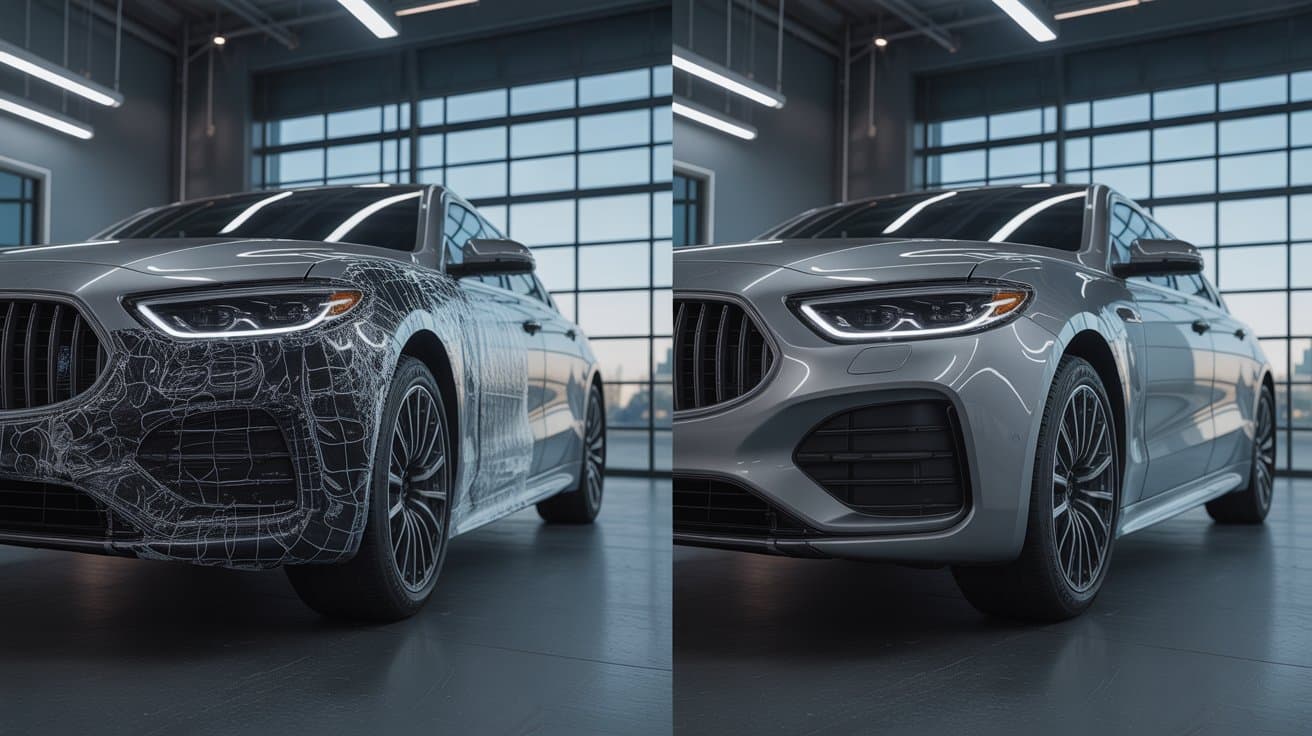
Car owners in Dubai often hear two major protection options recommended at premium detailing studios: Paint Protection Film (PPF) and Ceramic IR Films. Both serve important roles, both improve long-term vehicle care – but they are completely different solutions.
This guide breaks down 3M PPF vs Ceramic IR Films in a clear, practical way so you can decide exactly what your car needs based on heat, roads, usage, and long-term expectations.
Key Insights
- How PPF vs Ceramic IR Films differ in protection, durability, and cost for Dubai conditions.
- Which option makes more sense for new and luxury cars based on performance and value.
- Realistic expectations on lifespan, maintenance, and investment for each solution.
- A clear comparison (like the table) to help you make an informed, long-term choice.
PPF VS Ceramic IR Films: A Straightforward Definition!
Wondering what PPF and ceramic IR films really mean? Here’s a straightforward definition to help you understand both at a glance.
1. 3M PPF (Paint Protection Films)
PPF is a transparent, impact-absorbing urethane film applied to the car’s paint. High-grade products like 3m paint protection film dubai are known for resisting stone chips, scratches, sand abrasion, and UV damage. Many owners also consider it after researching 3M PPF Film life span, especially for long-term paint value.
2. 3M Ceramic IR Films
Ceramic IR Films are advanced window films designed for heat rejection, UV filtering, and cabin cooling. They keep the interior comfortable by blocking infrared rays, reducing glare, and protecting upholstery from fading. Unlike PPF, Ceramic IR Films in Dubai do not shield the paint – they protect the interior and cabin comfort.
The Core Difference Between PPF and Ceramic IR Films
A lot of confusion comes from comparing these two, especially when people search for topics like Difference between PPF and Ceramic IR Films or Which is better PPF or Ceramic IR Films.
Here is the simplest explanation:
PPF = Exterior Protection
There are many reasons to choose PPF film for cars. They are specifically designed for impact resistance, scratch defense, and paint preservation.
Ceramic IR Films = Interior Protection
On other hand ceramic IR film or ceramic coating are none less than an ultimate heat defence solution for cars. These types of automotive films are designed for effective heat reduction, block harmful UV rays, and improve overall driving comfort.
In short: They are not alternatives; they protect different aspects of the car.
Can You Apply Ceramic IR Film Over PPF?
Yes. This is the most popular combination among Dubai motorists.
- 3M Paint Protection Film Dubai protects the paint from physical damage
- Ceramic IR Films from Illusionaire protect the interior from heat and UV
- Both extend the overall life and condition of the vehicle
Car owners who doubt which is better for car protection: PPF or ceramic coating often end up choosing both because one protects the exterior, the other protects the people and interior inside.
Ideal Use Cases of PPF and Ceramic IR Films
Choose PPF if you want:
- Paint-chip resistance
- Long-term protection
- UV and sand abrasion control
- Better resale value
Choose Ceramic IR Films if you want:
- Cooler cabin temperatures
- Reduced glare
- UV protection for seats, leather & trims
- Non-reflective window protection
Appearance & Style of PPF and Ceramic IR Films
If you’re trying to understand the visual difference between PPF and Ceramic IR Films, these key characteristics help distinguish how each one looks on a car.
3M PPF for Cars
- Gloss or matte
- Enhances paint depth
- Nearly invisible when installed well
3M Ceramic IR Films for Cars
- Clear and non-reflective
- Maintain clean glass aesthetics
- Do not change the car’s exterior look
3M PPF vs Ceramic IR Films – Full Comparison Table
|
Category |
Paint Protection Film (PPF) |
Ceramic IR Films |
|
Primary Purpose |
Protects paint from scratches, chips, sand & road debris. |
Blocks heat, IR rays & UV to protect cabin and improve comfort. |
|
Installed On |
Exterior painted panels. |
Glass windows & windshield. |
|
Thickness |
150–200 microns approx. |
No noticeable thickness. |
|
Durability |
5–10 years depending on film. |
5–7 years depending on IR level. |
|
Heat Rejection |
Minimal heat control. |
High IR and UV rejection. |
|
Scratch Protection |
Excellent scratch & impact resistance. |
Provides no scratch resistance. |
|
Appearance |
Gloss, matte, satin finishes. |
Tinted or neutral depending IR level. |
|
Maintenance |
Low, just gentle washing. |
Low, similar to window tints. |
|
Cost Range |
Medium to high depending coverage. |
Medium depending IR grade. |
|
Best For |
Exterior longevity & resale value. |
Interior comfort & UV protection. |
Notes
- The specifications and performance levels listed above are based on general industry standards.
- Pricing ranges, durability, and protection levels are indicative and may differ based on coverage area, film series selected, and customer requirements.
- This comparison is intended to help car owners make an informed choice and should not be treated as a substitute for a professional inspection or consultation.
Conclusion: PPF vs Ceramic IR Films for New & Luxury Cars!
For new and luxury vehicles, choosing between PPF vs 3M Ceramic IR Films depends on what you want to protect. Together, both solutions work as one of the best car maintenance tips and a complete exterior-and-interior shield designed for Dubai’s climate.
With Illusionaire’s certified 3M installation standards, the results are consistent, durable, and tailored for cars that deserve premium treatment; from new sedans to high-end SUVs.
Frequently Asked Questions
PPF protects the paint from chips, scratches, and road debris. Ceramic IR Films reduce heat and UV through the glass. Two different protections for two different areas.
Yes. PPF is for painted panels, Ceramic IR Films are for windows. They don’t overlap, so both can be installed together.
3M PPF handles sand, and harsh sun on the exterior. Ceramic IR Films keep the cabin cooler and protect interiors. Both complement each other.
